Did You Read It? #2
Podcasts good and bad, a shady James I, a Gothic gem, and Netflix thrills

Podcast Treats—and Tricks
No matter how niche an interest you might have, there’s a podcast for it.
For years, the Halloween season has prompted me to scour the TV schedule for a Hammer film or two. I’ve always considered the British production company’s 1950s-1970s horror-film catalog—filled with vampires, zombies, werewolves, space aliens, mummies, and even a Gorgon and an Abominable Snowman—to be fall comfort food, along with leaf peeping, apple picking, buying overpriced pumpkin-spice drinks, and signing up for cemetery tours.
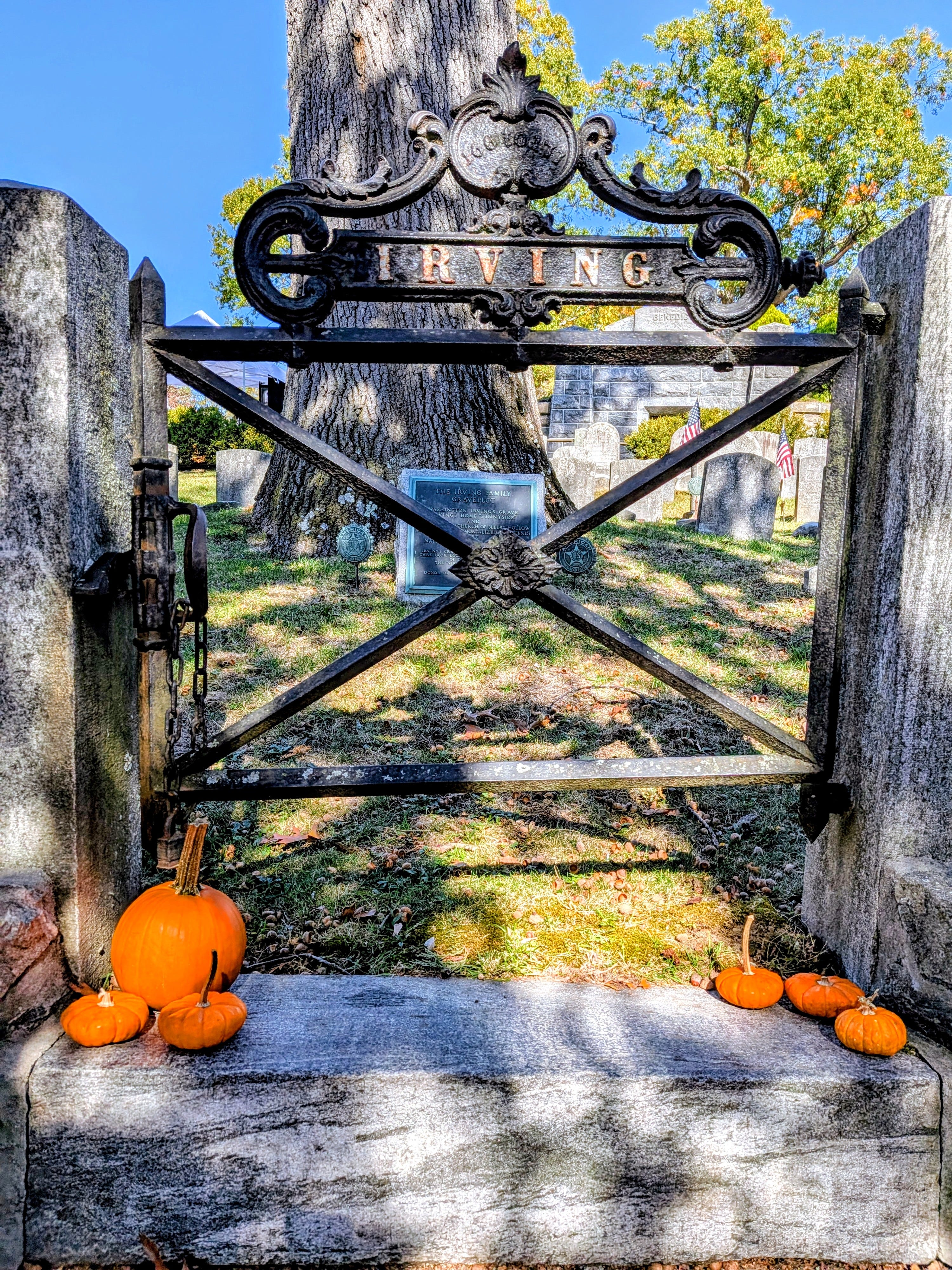
(BTW, this year, I dragged my husband and son to the Knickerbocker Tour of Sleepy Hollow Cemetery, the ground zero of historic American graveyards, resting place of Washington Irving, Andrew Carnegie, Brooke Astor, and hundreds more. At 90 acres, the cemetery is so vast that we parked at the wrong entrance and got lost. Everyone I stopped and asked for directions to the South Gate admitted they were lost as well, but no one seemed to mind.)
I’ve always adored the Hammer vibe: a vaguely Central European village, its occupants gathered near a roaring fire in the pub while living in fear of whoever—or whatever—lurks in nearby ancient castle. Imagine my delight this past summer when I heard that Evolution in Horror, the best of the horror podcasts, was sponsoring a new, separate podcast called Hammer Time. I expected an overview of the Hammer hits, wrapping up around Halloween. Wrong. This podcast, which debuted on October 1st, is proceeding at a deliberate pace, with one episode per week devoted to a different Hammer film, addressed in chronological order. By the time Halloween arrived, we hadn’t even reached Horror of Dracula, made in 1958. I’m not sure we will make our way through the Hammer catalog by Halloween 2026!
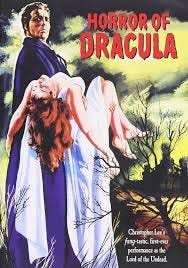
But I’m not complaining. The cohosts, Becky Darke and Kevin Lyons, are authorities not only on Hammer but also on horror films and broader pop culture. When Darke and Lyons did reach Dracula this past week and told its tale, there were so many rewards to reap. They explained that this is a stripped-down, streamlined version of Bram Stoker’s novel, the polar opposite of the theatrical adaptation that inspired Bela Lugosi’s version. Christopher Lee reinvented the Transylvanian count in a portrayal that oozed sex and arrogance, yet also conveyed absolute terror. I don’t think everyone realizes the influence this performance had. Jonathan Harker is not a hapless estate agent here but an undercover vampire hunter deployed by Peter Cushing’s Van Helsing. Moreover, Cushing plays him as anything but an elderly Dutchman muttering lore, as you see in everyone from Anthony Hopkins to Willem Defoe. Cushing athletically leaps across rooms to destroy Dracula.
In this podcast episode, we learn how the cape worn by six-foot-five Christopher Lee was weighted to create its menacing billow and that Cushing didn’t want to vanquish Dracula by just brandishing a crucifix because Van Helsing was “starting to feel like a crucifix salesman.” And it was director Terence Fisher who created the Hammer Gothic DNA of rich color palette, lush costumes, and small but opulent rooms.
This is the kind of expertise I relish. Too often, I find horror podcasters faltering on anything pre-2000. They don’t know as much as I’d like about films pre-Saw, Paranormal Activity, or The Ring. Last year, I cringed to hear one of them complaining that the 1979 TV adaptation of Salem's Lot, directed by Tobe Hooper, was overcrowded with old “nobodies” like Elisha Cook Jr. and Marie Windsor. Sacrilege!
History Podcast Letdown
After enjoying two episodes from different podcasts on Henry VIII in recent weeks, I was excited to see that the long-running podcast The Rest Is History was releasing a series of episodes devoted to Elizabeth I. I’ve enjoyed the witty and erudite talks by Tom Holland and Dominic Sandbrook, especially their mini seasons devoted to Lord Byron and the French Revolution. This is why I was dismayed to listen to so many mistakes or misinterpretations in “Elizabeth I: The Fall of the Axe.”
After beginning reasonably well on the background of Henry VIII and his first marriage, I’m told that Elizabeth I’s mother, Anne Boleyn, “was not even really an aristocrat.” Oh? She was the granddaughter of the Duke of Norfolk and spent her childhood and teenage years as a maid of honour in the two most prestigious European courts: Brussels and Paris. No other Englishwoman in the early 16th century had such a heady start. We’re also told that Anne’s father, Thomas Boleyn, was a country squire who loved horses, akin to Major Ferguson, Sarah Ferguson’s father. What? Boleyn, proficient in Latin and French, was England’s ambassador to France, nothing like the “galloping major.”
Things got worse. They say Anne Boleyn miscarried of nearly a full-term son in 1534, Henry VIII formed a liaison with Jane Seymour in 1534, and Henry Norris, executed for adultery with Anne in 1536, defended her on the scaffold. The historical record does not support any of these “facts.”
What makes it so baffling is that in the YouTube version, you can see the men reading from notes. Where on earth did they get these notes? It’s not as if the life of Anne Boleyn is obscure! The Tudors and The Other Boleyn Girl get more history right than this. I’m baffled.
Nonfiction Book to the Rescue
I don’t think I will be listening to the rest of The Rest of History’s episodes on Elizabeth I. Which is a shame, because it feels like these days historians are putting the Late Elizabethan court under greater scrutiny than the usual “Armada-Shakespeare-James I Succession” golden haze.
Five years ago, I was drawn to the end of Elizabeth’s reign and wrote “Elizabeth I: The Final Days of the Great Queen” for English Historical Fiction Authors. When researching it, I felt like Elizabeth’s naming of her successor, the Scottish king who was her first cousin twice removed, carried the whiff of the apocryphal. Supposedly, while dying and unable to speak, she pointed to her head when James’ name was spoken.
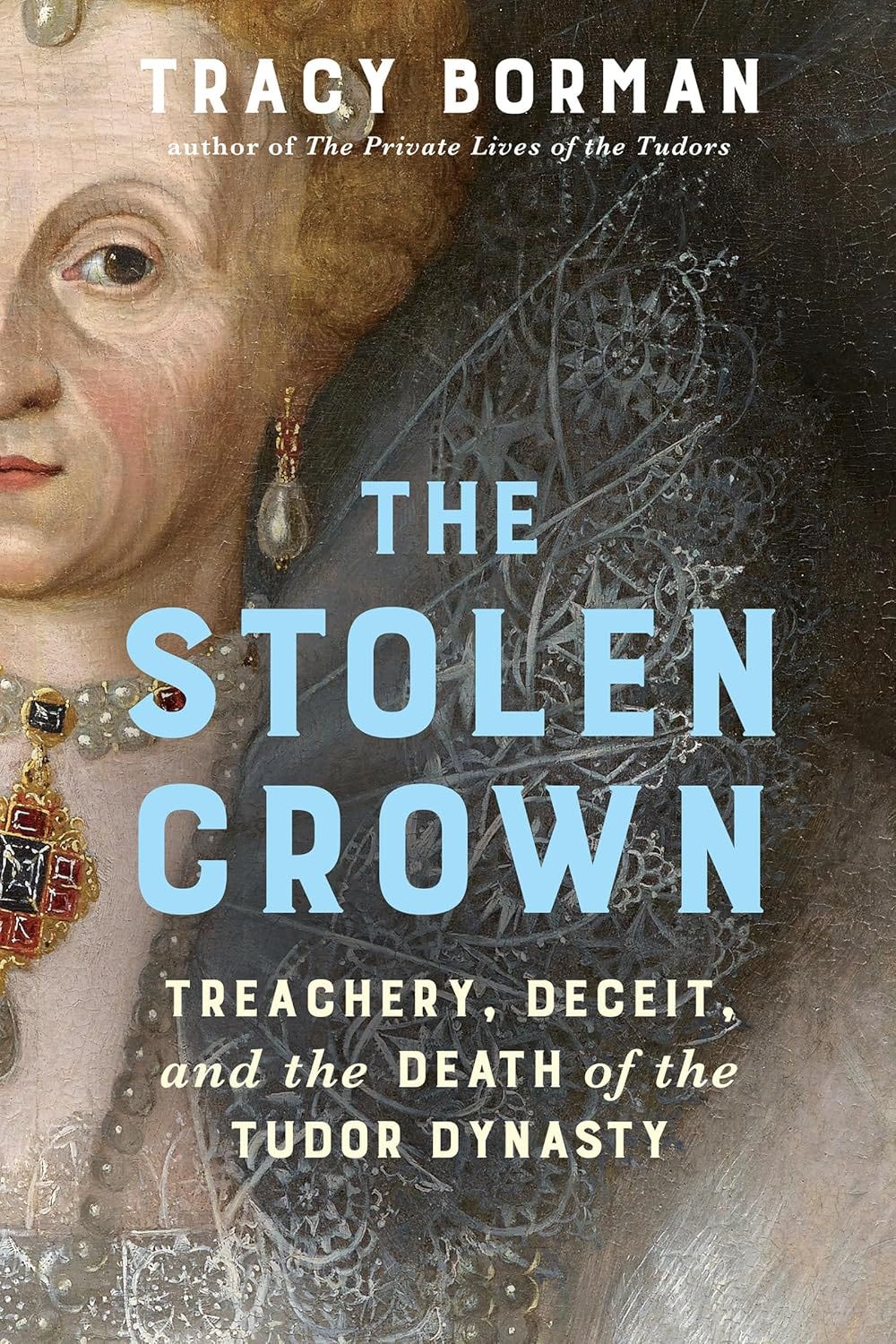
I have just finished reading a full-length book that delves deeply into this fascinating subject: The Stolen Crown: Treachery, Deceit and the Death of the Tudor Dynasty. The author is Tracy Borman, Chief Historian for Historic Royal Palaces, the charity that manages Hampton Court Palace, the Tower of London, Kensington Palace, Kew Palace, and more. Borman’s research makes a strong case that Elizabeth I never named James; instead, Elizabeth’s closest counselors engaged in a dangerous conspiracy with James, up in Scotland, to smooth the way for him to succeed. Years after he took the English throne, James was so sensitive on this subject that he pressured William Camden, writing a book about Elizabeth I, to distort the tale of the succession sequence. Borman reports that examining Camden’s handwritten manuscript proves that key passages were pasted over and rewritten to make James I look better.
James I is very much a mixed bag. Undeniably intelligent, he was obsessed with a fear of witchcraft and personally wrote Demonology, a treatise meant to justify witch trials and executions. Elizabeth’s councillors were taken aback to realize that, unlike the last Tudor monarch, he was not interested in hands-on running of the country or financing world explorers. When not ranting about witches, he wanted to go hunting and have affairs with beautiful young men. The miniseries Mary & George depicts an ambitious woman from a second-rate gentry family, played memorably by Julianne Moore, scheming to get her handsome son, played by Nicholas Galitzine, into the bed of the new King of England.
One bone I have to pick with Borman’s book is the title. James “stole” it from…who? He had no serious competition for the English throne. His tragic first cousin, Arabella Stuart, seems to have struggled with severe emotional problems and behaved erratically, Norton writes. Other relatives with a bit of royal blood were not persuasive candidates. He was the strongest in a weak field. While she took great pains not to name him officially, Elizabeth maintained a steady correspondence with young James, giving him a “master class in monarchy” that, in a pique of misogyny, he ignored his whole reign, Norton writes. James didn’t want to work with Parliament or create a majestic presence that the public could admire, as the Virgin Queen had done. Instead, he was obsessed with the “divine right of kings,” a concept unconnected to leadership, which he unfortunately instilled in his son, the future headless Charles I.
The Stuart father and son’s conviction that God had put them on a higher plane than mere mortals didn’t go down well in the 17th century. Today, reading about disgraced Andrew Windsor-Mountbatten’s demand that he be given a cook, housekeeper, gardener, and a butler before agreeing to hide himself away on the vast Sandringham estate, you have to wonder what delusions of innate superiority are still being inculcated by the royal family.
Can a more severe punishment be imposed on Andrew? This isn’t the 15th century, when Edward IV could order his brother, the duke of Clarence, to be drowned in a barrel of Malmsey. As Tina Brown pointed out in The Interview, released yesterday, it’s risky to make Andrew and Fergie’s lives so horrible that they have nothing left but to sell their secrets.
A Gothic Gem
Halloween may be behind us, but a centuries-old tradition of Christmastime ghost stories lies ahead. It is one I honored with my 2019 novella, The Ghost of Madison Avenue.
Writing The Heiress of Northanger Abbey for Muse Books this year led me to go deeper into the Gothic genre and to reflect on its various stages and permutations. One of my “guides” became YouTuber Sinead Hanna. Also an actress, podcaster, and Instagram influencer, she records wonderful video round-ups of Gothic movies and books worth knowing about. In her latest video, “Chilling Books for Winter,” Sinead says, “It is a time of year when the spirits feel closer. There is a lot of folklore of demons and creatures who start to roam the land this time of year, taking advantage of those who are weak and out there, working in the cold without protection.”
Through Sinead, I recently discovered a rich and eerie Gothic novel, The Woman in Black, which I had somehow missed entirely, despite its adaptation into a stage play and a 2012 movie starring Daniel Radcliffe. The novel, which opens with a Christmas Eve ghost-story sharing, offers superb atmosphere, roaming from an unfriendly Yorkshire village to a bone-chilling graveyard ceremony to, best of all, Eel Marsh House, a coastal mansion found at the end of a narrow causeway that is often engulfed.
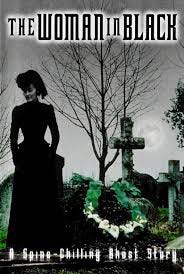
I found this interview of Susan Hill interesting, which revealed her creative process: “I have always loved reading ghost stories but had realised that in recent years not a lot had been written. People were writing horror, but horror is different to me. You can have a horror story that doesn’t have a ghost, whereas a ghost story could be horror but also could be unnerving in a different way or even heartbreaking. I ended up making a list of the key elements I thought a good ghost story should have and worked from that. I thought it should have atmosphere, lots of atmosphere, an isolated location which in itself is unnerving, and I was absolutely sure that the ghost needed a reason to be there. I wasn’t sure at first whether that would be because they wanted revenge, or they needed to communicate with the living world, but I knew they had to have motivation.” It’s an important lesson. Everybody needs motivation.
Netflix Binge Par Excellence
Doomsday headlines are popping up about the film industry. Deadline asks, “What’s Up With the Fallout for Adult Upscale Movies at the Fall Box Office?” In Variety, Owen Gleiberman wonders “Where Have All the Indie Hits Gone?”
I’ve always loved going to the movies. When I was a teenager, my friends and I saw just about every movie that opened in Livonia, Michigan, and I nurture that rush of popcorn-scented excitement when the lights go down. I rushed to the closest big screens to my house to see Oppenheimer and Nosferatu on their opening weekends.
It’s possible to overthink this trend. Looking at the 2025 movies that tanked, I have to say, I don’t want to see Julia Roberts struggling with cancel culture in After the Fall or Dwayne Johnson as a mixed martial artist in The Smashing Machine or Sydney Sweeney as a professional boxer with an abusive husband. Honestly, I would pay a little money not to see these movies.
Meanwhile, Netflix is cooking. I will get into Frankenstein and Death by Lightning in future Substacks. For this Substack, I must praise the psychological thriller The Beast in Me. I binged it in two days.
It doesn’t have the most original plot in the world: a depressed and blocked writer persuades a volatile real estate mogul to sit down for interviews about his life, although he has a missing (assumed murdered) first wife, a la Robert Durst. This is standard domestic thriller fare. But what a sensational cast. I loved Claire Danes in Homeland, Mathew Rhys in The Americans, and Jonathan Banks in Breaking Bad. I miss all three of those series. In The Beast in Me, it’s like they have recombined in a new potent formula.
What this limited series also has is what we call a propulsive plot in the book business. There’s energy and pacing and well-defined conflict. In basic terms, you just want to know what happens next. Can’t we take these things and inject them into the films on the big screen? Adult and Upscale doesn’t have to mean Boring.
Next Up Novel
I’m beginning The In Crowd, by Charlotte Vassell. The story begins with a body found in the River Thames, which is connected to a party of socialites and politicians. To me, it’s an irresistible premise. :)
I don’t know Hammer’s films like I should. I feel the lack.
I love that you appreciate the Hammer films, and I was watching as much of them as I could all through October. You got to appreciate the old horror films which are so superior to today's slash and gore fare. Also love your discussion of James I. I have George Villiers as a character in my second novel, and I also got to see his portrait in the Guiness collection in London. Thanks for the references for non-fiction accounts of James I. He is an underexplored character.